

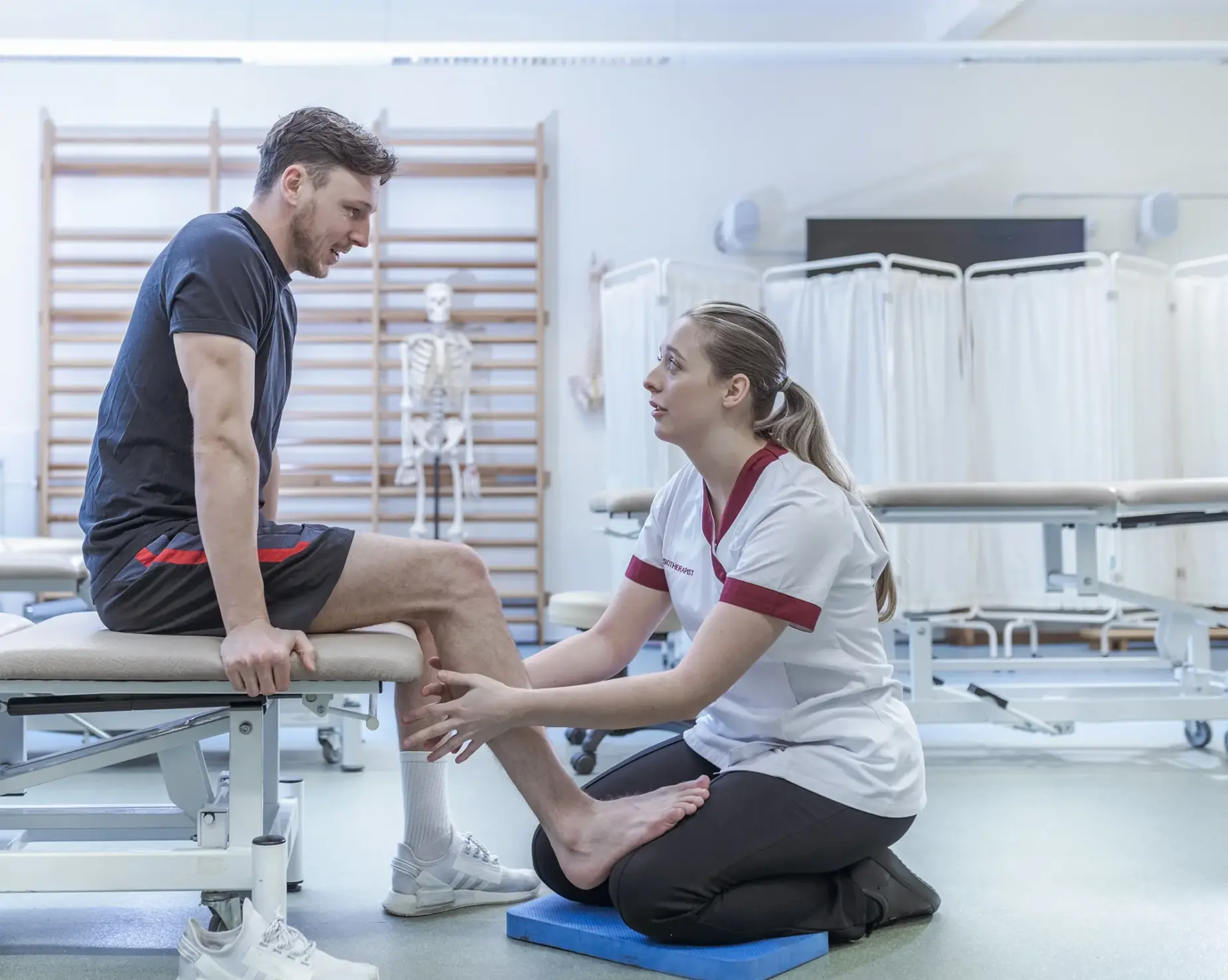
If every step sends a sharp pain shooting up your leg, you are likely looking for shin splint exercises to find immediate relief. These specific shin splint exercises are designed to reduce inflammation, strengthen the lower leg, and get you back on track to an active lifestyle.
Dealing with lower leg pain can be incredibly frustrating, especially when it sidelines you from your daily run or simple walks around the neighborhood. At Fusion Rehab and Wellness, we understand that you want to return to your favorite activities without that nagging ache. While rest is important, proactive movement is the key to long-term recovery.
In this guide, we will walk you through the best movements to alleviate pain, explain why this injury occurs, and show you how our team in Virginia can help you conquer your fitness goals.
Understanding the “Why” Behind the Pain
Before jumping into the workout, it helps to understand what is happening inside your leg. Shin splints, medically known as Medial Tibial Stress Syndrome, occur when the muscles, tendons, and bone tissue around your tibia (shin bone) become overworked.
This is a classic overuse injury. It often happens when you intensify your training routines too quickly, change your running surface, or wear worn-out footwear. The repetitive stress causes inflammation, leading to that familiar throbbing sensation. While common among runners, it can affect anyone who spends a lot of time on their feet.
The good news is that with the right shin splint exercises and a solid recovery plan, this condition is highly treatable.
The Top 5 Shin Splint Exercises for Recovery
Incorporating these movements into your daily routine can help stretch tight muscles and strengthen the weak areas that contribute to injury.
1. Toe Taps (Anterior Tibialis Activation)
Weakness in the front of the shin is a major culprit in this condition. This simple movement targets the anterior tibialis muscle directly.
- How to do it: Stand with your back against a wall, feet shoulder-width apart and slightly away from the wall. Keeping your heels planted, lift your toes up toward your shins as high as you can, then lower them back down.
- Reps: Aim for 3 sets of 15-20 repetitions. You should feel a “burn” in the front of your shins.
2. Gastrocnemius and Soleus Stretches
Tight calf muscles pull on the attachment points of the shin bone, exacerbating pain. You need to stretch both main muscles in the calf.
- How to do it: Face a wall and step one foot back.
-
- Straight Leg: Keep the back leg straight and press the heel into the ground to stretch the upper calf (Gastrocnemius).
- Bent Knee: Keep the same stance but slightly bend the back knee while keeping the heel down to target the lower calf (Soleus).
- Duration: Hold each stretch for 30-45 seconds on each leg.
3. Heel Walking
This functional exercise strengthens the muscles responsible for lifting your foot, helping to absorb shock more effectively when you walk or run.
- How to do it: Lift your toes off the ground so you are balancing on your heels. Walk forward for about 10-15 yards, keeping your toes pointed upward the entire time.
- Reps: Repeat this 3 to 4 times.
4. Single-Leg Glute Bridges
Believe it or not, your shins might hurt because your hips are weak. If your glutes aren’t doing their job, your lower legs take on extra impact.
- How to do it: Lie on your back with knees bent and feet flat. Lift one leg in the air. Push through the heel of the planted foot to lift your hips toward the ceiling. Lower slowly.
- Reps: 3 sets of 10-12 reps per leg.
5. Towel Scrunches
Strengthening the intrinsic muscles of the foot provides a better foundation for the rest of your leg.
- How to do it: Sit on a chair with a towel spread flat under your foot. Use your toes to scrunch the towel toward you, then push it back out.
- Reps: Repeat for 2 minutes on each foot.
When Home Exercises Aren’t Enough
While at-home shin splint exercises are a great starting point, persistent pain often requires a professional eye. If your pain continues despite rest and stretching, you may have underlying biomechanical issues or inflammation that requires clinical intervention.
At Fusion Rehab and Wellness, we offer top-rated physical therapy in Virginia to tackle these stubborn injuries. Our approach goes beyond just treating symptoms; we use our proven 4-Phase Recovery Program (Pain, Prime, Perform, Prevent) to fix the root cause.
Depending on your specific needs, our award-winning therapists might recommend:
- Dry Needling: This is highly effective for releasing tight trigger points in the calf muscles that pull on the shin bone.
- Cupping Therapy: This can help increase blood flow and reduce inflammation in the affected tissues.
- Ultrasound: To break down scar tissue and expedite healing.
- Gait Analysis: We can look at how you run or walk to correct mechanical errors.
Whether you are in Reston, Fredericksburg, or Spotsylvania, our team is ready to design a personalized plan just for you.
Preventing Future Flare-Ups
Once the pain is gone, the goal is to keep it away. Incorporate these habits into your lifestyle to prevent recurrence:
- Respect the 10% Rule: Never increase your weekly running mileage or training intensity by more than 10% at a time.
- Check Your Shoes: Athletic shoes lose their shock-absorbing ability after 300-500 miles. If your shoes are worn out, your shins take the hit.
- Vary Your Surface: Running on concrete is hard on the body. Try to mix in softer surfaces like grass, trails, or a treadmill.
- Cross-Train: Give your legs a break by incorporating low-impact cardio like cycling or using our Aquatic Therapy services.
Ready to Live Pain-Free?
You don’t have to let leg pain dictate your life. Whether you are training for a marathon or just want to walk comfortably, the right shin splint exercises combined with professional care can make all the difference.
Our team has been recognized as “Best of the Burg” for multiple years because we are dedicated to compassionate, effective care. We accept most insurance plans and offer flexible scheduling at our clinics across Virginia.
Don’t wait until a small ache becomes a stress fracture. Let us help you get back to doing what you love.